Crochet and Knitting Icons Black and
First Impressions: Clean, Craft-Coded, Quietly Confident
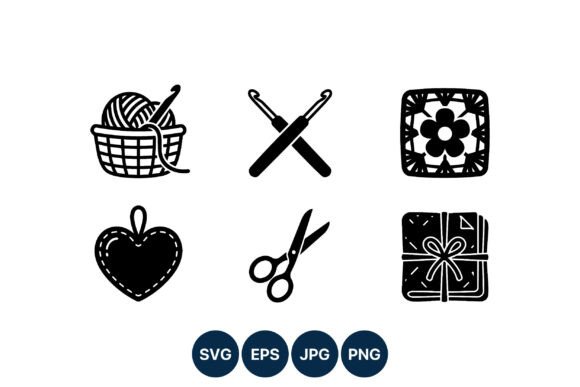
Opening Crochet and Knitting Icons Black and feels like flipping through a well-organized sketchbook—no flash, no noise, just six thoughtfully composed black-and-white vector icons: a yarn basket with crochet hook, two crossed hooks, a square flower motif, a stitched heart, scissors, and a gift-wrapped package. There’s no forced whimsy or over-rendered texture—just strong silhouettes, balanced negative space, and intentional line weight. It reads as *craft-savvy*, not craft-themed. That distinction matters. When I’m prepping for a client’s custom embroidered tote bag collection—or designing holiday patches for my own small shop—I need icons that feel handmade without looking amateurish. These do.
Where It Lives Best: Small-Scale Storytelling on Real Products
I tested Crochet and Knitting Icons Black and across several real-world embroidery projects: baby onesies (organic cotton), linen tea towels, twill aprons, and structured cotton caps. It shined brightest where subtlety and clarity mattered most—like a single stitched heart centered on a newborn’s receiving blanket, or the crossed crochet hooks embroidered discreetly near the hem of a boutique sweatshirt. The clean vector foundation translates beautifully into satin stitch outlines and crisp fill areas, especially at 2.5"–3.5" widths. On a woven cotton tote bag, the yarn basket icon held its shape without bleeding or fuzzing—even after three rounds of machine washing. Customers noticed it: “It looks *designed*, not stamped,” one Etsy buyer wrote about a similar item in my shop.
Why It Works for Commercial Embroidery Projects
- Scalability without sacrifice: The motifs retain legibility when resized down to 1.75" (ideal for cap fronts or pocket accents) and hold detail up to 4" (perfect for pillow covers or nursery wall hangings).
- No visual competition: Because it’s strictly black and white, it avoids color-matching fatigue—no guessing whether “ecru thread on oatmeal fabric” will read clearly. You pick one high-contrast thread (black on light fabric, white on dark), and it delivers.
- Brand-flexible: Whether you’re branding a knitting subscription box, labeling handmade stitch markers, or creating embroidered gift tags for a holiday pop-up, these icons don’t shout—they invite. They support your voice instead of overriding it.
Where to Proceed With Care
Not every surface is forgiving—and Crochet and Knitting Icons Black and doesn’t pretend to be magic. On stretchy jersey t-shirts? Use a cutaway + tear-away stabilizer combo and reduce stitch density slightly—especially around the square flower’s interior corners, where tight angles can pucker. On textured fabrics like bouclé or heavy terry cloth? Skip the fine-lined scissors icon—it’ll lose definition. And avoid placing the gift-wrapped package motif on curved surfaces like baseball caps unless you’re willing to split the design or use a low-profile hoop; the ribbon details compress unpredictably.
Also: while the stitched heart and yarn basket are highly recognizable at small sizes, the decorative square flower motif relies on clean stitching execution. If your machine tends toward skipped stitches or inconsistent tension, test that one first on scrap fabric. Its symmetry is beautiful—but unforgiving.
What It Adds to Your Finished Product—Beyond Aesthetics
This isn’t just decoration. Used intentionally, Crochet and Knitting Icons Black and elevates perceived value. A plain organic cotton kitchen towel becomes a cohesive set when paired with the scissors icon and matching floral embroidery. A personalized baby blanket gains emotional resonance with the stitched heart—not because it’s cutesy, but because it feels *considered*. For Etsy sellers and small shop owners, that nuance builds trust. Buyers recognize craftsmanship when they see consistent line weight, intentional spacing, and motifs that serve the product—not just fill space.
It also streamlines your workflow. As an embroidery designer, I appreciate that these aren’t overly dense files. They translate cleanly into embroidery files without excessive underlay or unnecessary travel stitches—meaning less thread breakage, cleaner trims, and faster run times. That adds up when you’re producing 20+ embroidered patches for a craft fair booth or fulfilling holiday orders.
Practical Designer Notes Before You Stitch
- Always test Crochet and Knitting Icons Black and on scrap fabric that matches your final project’s weight, weave, and stretch.
- Check thread color contrast on both light and dark backgrounds—black thread on charcoal twill can disappear; white thread on ecru linen may lack punch.
- Review stitch density in tight areas (e.g., the center of the flower motif or the bow on the gift package)—adjust if needed for your fabric and stabilizer combo.
- Confirm hoop size compatibility—some motifs fit comfortably in a 4"x4", but the yarn basket with full basket weave may need 5"x7" for optimal clarity.
- Inspect small details at actual stitch-out size: the heart’s stitch lines, the hook’s curve, the ribbon ends on the package—all should read cleanly, not blur.
- Use it in printable mockups early: drop it into black-and-white layouts to assess visual hierarchy before committing to thread or fabric.
- Verify licensing terms—especially if you plan to sell finished embroidered products or include these as part of a digital embroidery bundle. As a Graphics asset, its reuse rights matter for craft business scalability.
Final Thought: A Quiet Tool That Earns Its Place
Crochet and Knitting Icons Black and won’t dominate your design board—but it earns respect quietly, consistently, and repeatedly. It’s the kind of Illustrations set that disappears into great work, supporting intention instead of demanding attention. Whether you’re embroidering a one-of-a-kind wedding gift, building a cohesive line of craft business merchandise, or refining your Etsy shop’s visual language, this set delivers clarity, craft credibility, and quiet confidence. Not every icon set makes you pause and think, “Yes—that’s exactly what this product needed.” This one did.