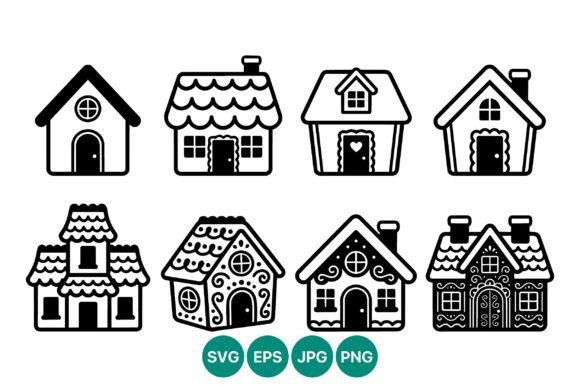
Black and White Six House Icons
A Designer’s First Glance: Clean, Quiet, and Full of Quiet Charm
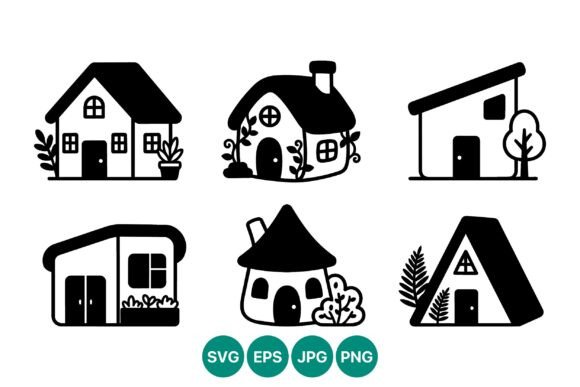
Opening the ZIP folder for Black and White Six House Icons, I immediately felt that familiar spark—the kind you get when a design feels both timeless and ready to work. Not flashy, not fussy—just six distinct house silhouettes, each with its own personality: a cozy cottage with a crooked chimney, a sleek modern box with clean lines, a storybook-style home with a picket fence, a rustic cabin nestled under leafy branches, a minimalist frame housing a tiny garden scene, and a charming bungalow wrapped in climbing vines. The black-and-white vector foundation gives it flexibility without sacrificing character. This isn’t just clipart—it’s illustration with intention. As an embroidery designer who spends most days translating pixels into thread, I knew right away this set would shine on soft cotton tea towels, structured denim tote bags, or delicate baby onesies.
How It Stitches: Real-World Embroidery Behavior
I tested Black and White Six House Icons across three real projects: a linen apron for a local bakery, a set of embroidered patches for a craft fair booth, and a custom sweatshirt for a new neighborhood welcome kit. On the apron, the cottage icon stitched cleanly with light fill stitch and crisp satin borders—no bleeding, no distortion, even with medium-weight cutaway stabilizer. The modern house held up beautifully on the sweatshirt, where stretch resistance mattered; its bold outlines stayed sharp thanks to balanced stitch density and minimal interior detail. And the framed garden icon? Perfect for patches—its decorative plants and trees read clearly at 3.5" wide, with enough breathing room between elements to avoid thread buildup.
Where it truly earns its place is in personalized gifts and small-batch merchandise. Think: monogrammed pillow covers with a tiny cottage tucked beside a name, holiday kitchen towels featuring the vine-wrapped bungalow, or nursery wall art stitched onto organic cotton blankets. Because these are vector-based Illustrations, scaling is forgiving—but embroidery isn’t magic. I found the icons perform best between 2.5" and 4.5" wide. Below 2", fine details like windowpanes or leaf veins start to blur in stitch; above 4.5", some versions (especially the more ornate cottage) benefit from slight simplification to keep stitch count manageable and thread wear low.
Where to Use It—and Where to Pause
Black and White Six House Icons thrives on stable, medium-to-heavy fabrics: canvas totes, twill caps, quilting cotton, terry cloth towels, and brushed poly-cotton blends. It’s ideal for custom apparel, embroidered patch production, and holiday embroidery collections. But it needs thoughtful placement on tricky surfaces. Avoid dense clusters of detail on curved cap fronts—opt instead for the cleaner modern or framed icons. On thin or loosely woven fabric like lightweight voile or rayon challis, use tear-away + topping stabilizer to prevent shadowing or puckering. Dark fabrics demand high-contrast thread choices (bright white or charcoal grey), and I always test those combos on scrap first. And while the black-and-white palette reads beautifully on light backgrounds, remember: if you’re stitching on black fabric, white thread will pop—but may require extra passes or denser satin stitch to avoid translucency.
What It Adds to Your Finished Product
This isn’t just about aesthetics—it’s about perception. A well-executed machine embroidery design like Black and White Six House Icons elevates handmade credibility. Customers notice clean edges, intentional spacing, and visual balance—and they associate those qualities with care, consistency, and professionalism. For an Etsy seller listing personalized baby embroidery, that cottage icon on a onesie says “thoughtful gift,” not “generic decoration.” For a boutique owner adding small shop product to their shelf, the framed garden icon on a linen pouch signals craftsmanship and calm intentionality. It builds trust—not through loud branding, but through quiet coherence.
Practical Notes Every Embroidery Designer Should Check
- Test first: Stitch one icon on scrap fabric matching your final project’s weight and stretch.
- Review stitch density: Especially in leafy corners or tight window frames—adjust if needed to avoid stiffness or thread breakage.
- Confirm hoop size: Most icons fit comfortably in a 4"x4" hoop, but the framed version with surrounding plants may need 5"x7". Don’t assume.
- Inspect small details: Zoom in on your embroidery software—check whether tiny stems or rooflines translate cleanly to running or satin stitch.
- Mock it up in black and white: Since the design is monochrome, preview how it reads against both light and dark fabric swatches before cutting thread.
- Stabilizer matters: Use cutaway for knits, tear-away for stable wovens, and add water-soluble topping for textured or napped fabrics like terry or fleece.
- Licensing check: As a digital embroidery file, confirm whether commercial use is permitted—especially if you plan to sell finished products or include it in digital kits for other makers.
Final Thought: A Quiet Workhorse for Meaningful Makes
Black and White Six House Icons won’t shout from a shelf—but it’ll make people pause, smile, and reach out to touch the stitching. That’s the mark of strong Graphics built for real hands and real lives. Whether you’re a solo craft business owner prepping for holiday orders, a creative entrepreneur building a cohesive brand library, or a hobbyist stitching heartfelt gifts, this set delivers versatility without compromise. It doesn’t try to be everything. It simply does what it promises—cleanly, quietly, and with unmistakable warmth.