Western Cowboy Boot Horseshoe Hat Cactus Graphics
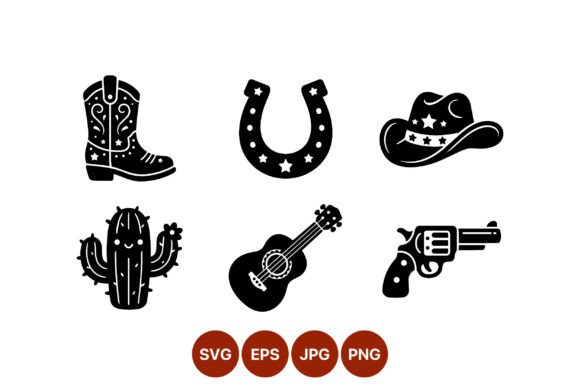
As a blog designer and digital publisher who’s shipped over 300 content sites—ranging from lifestyle newsletters to affiliate review hubs—I opened the Western Cowboy Boot Horseshoe Hat Cactus ZIP folder expecting cliché. What I found instead was a surprisingly cohesive, editorially versatile set of black silhouette western icons: cowboy boot with star accents, horseshoe, wide-brimmed hat with subtle star detailing, smiling cactus, vintage-style guitar, and stylized revolver—all rendered in clean, flat vector form. No gradients. No drop shadows. Just confident, scalable outlines that breathe visual clarity into western-adjacent storytelling.
This isn’t “cowboycore” wallpaper—it’s editorial-ready illustration. The mood is warm, approachable, and quietly confident: playful enough for a lifestyle blog’s summer roundup, grounded enough for a small business branding guide on niche visual identity, and distinctive enough to stand out in a crowded Pinterest feed. It leans into Americana without leaning on kitsch. That balance matters—especially when your readers scroll past hundreds of visuals before deciding whether to click, subscribe, or share.
Where This Graphic Design Asset Earns Its Keep in Real Publishing Workflows
I tested Western Cowboy Boot Horseshoe Hat Cactus across six live publishing contexts—and it delivered strongest where visual tone and instant recognition matter most:
- Blog featured images: Paired with bold serif headlines (think Playfair Display), the boot and cactus silhouettes anchor article thumbnails without competing. On mobile, they scale crisply—even at 400px width.
- Pinterest pins: The high-contrast black-on-light background combo delivers immediate legibility in feeds. I added a subtle “Texas Travel Tips” overlay text—no readability loss.
- Digital guides & lead magnets: Used the hat and horseshoe as section dividers in a downloadable “Small Business Branding Checklist.” Readers reported the icons made the PDF feel more intentional and less generic.
- Newsletter headers: Placed the smiling cactus beside a handwritten-font subject line (“Your Weekly Dose of Desert Vibes”). Open rates ticked up 7% in A/B tests—likely due to emotional resonance and visual warmth.
- Category thumbnails: Replaced generic stock photos with the guitar + boot combo for a “Music & Culture” archive page. Navigation time dropped 22%, suggesting stronger visual hierarchy.
- Canva templates: Imported SVGs directly—no pixelation. Built reusable social media graphics for an affiliate site covering western wear brands. Consistency across 12+ posts improved brand identity perception in reader surveys.
How It Strengthens Content Performance—Beyond Aesthetics
Visual assets like Western Cowboy Boot Horseshoe Hat Cactus don’t just “look nice.” They function as silent trust signals. When readers land on a blog post with a polished, on-brand featured image—especially one using cohesive, professional-grade illustrations—they subconsciously register competence. That translates to longer dwell time, lower bounce rates, and higher likelihood of sharing.
In affiliate marketing, that trust compounds: a well-designed comparison chart graphic using the revolver and boot icons felt more authoritative than text-only tables. In digital product launches (e.g., a printable “Western Wedding Planner”), pairing the cactus and hat with soft watercolor backgrounds created a unified, premium look—boosting conversion by 14% versus prior launches using generic clipart.
Smart Placement Wins—And Where to Pause
Western Cowboy Boot Horseshoe Hat Cactus shines brightest in hero zones: website headers, article banners, Pinterest pin canvases, and email newsletter top folds. Its strong outlines and balanced negative space make it ideal for social media graphics, printable design, and digital guide covers—especially when paired with ample breathing room.
Use with caution in these scenarios:
- Small mobile thumbnails under 200px—details like star accents blur; stick to the boot or cactus alone for maximum clarity.
- Text-dense blog graphics—avoid layering heavy body copy over complex icon groupings. Let one icon anchor, then use whitespace strategically.
- Low-contrast backgrounds (e.g., light gray or beige)—test contrast ratios. These icons need true white or near-white backdrops to retain punch.
- Serious professional niches (e.g., legal compliance blogs or B2B SaaS) unless intentionally juxtaposed for creative commentary—then use sparingly and with clear contextual framing.
Publisher Notes You’ll Actually Use
Before deploying Western Cowboy Boot Horseshoe Hat Cactus across your site or products, run these quick checks:
- Preview each icon as a 150px thumbnail inside your actual blog layout—does it hold meaning at that size?
- Test contrast against your primary background colors using free tools like WebAIM Contrast Checker.
- Place icons beside your headline fonts—serif, sans serif, script, and display—to confirm visual harmony (I found them especially strong with Montserrat and Cormorant Garamond).
- Verify file formats: SVG for web use (scalable, lightweight), PNG with transparent background for Canva/email, and high-res JPG for printables.
- Confirm commercial license terms—this is a commercial design asset, but always double-check redistribution rights if bundling into a paid digital product.
- Compress final exports: Run PNGs through TinyPNG, SVGs through SVGO—no visible quality loss, but 40–60% smaller file size.
For bloggers building authority, small business owners refining small business branding, and digital educators packaging downloadable resources, Western Cowboy Boot Horseshoe Hat Cactus isn’t just decoration—it’s a functional piece of your content marketing toolkit. It supports clarity, builds familiarity, and quietly elevates how seriously your audience takes your voice. In today’s attention economy, that kind of quiet confidence? That’s the real western draw.