Tender Plant Parent Pot with Leaves
A Playful, Warm First Impression—But Does It Stitch Cleanly?
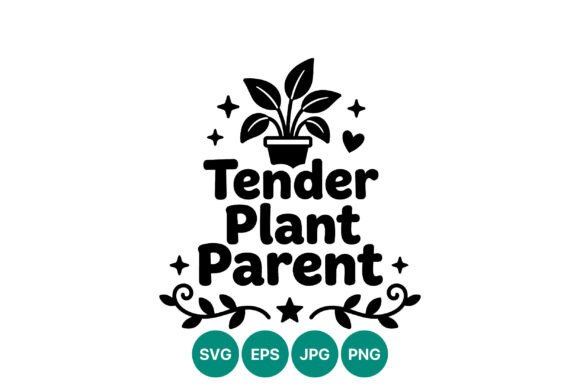
When I opened the Tender Plant Parent Pot with Leaves file, my first thought wasn’t “cute” or “trendy”—it was “this feels like a real person’s handwriting.” The black and white vector art balances whimsy and warmth: soft leafy swirls curl around a simple potted plant, stars and a heart nestle into the negative space, and the phrase “tender plant parent” sits comfortably above—not shouting, not shrinking. It’s not overly detailed, but it’s not minimal either. That middle ground is exactly where embroidery thrives—if handled right.
Real-World Test: Embroidering It on a Linen-Cotton Tea Towel
Last week, I used Tender Plant Parent Pot with Leaves for a small-batch run of kitchen towels for a local boutique. We chose natural linen-cotton blend—textured, slightly uneven, and unforgiving on thin lines. I hooped it with medium-weight tear-away stabilizer, tested thread contrast (soft sage green on cream), and ran a quick sample before stitching all 24 pieces. The result? Crisp outlines, readable lettering, and swirls that held their shape without puckering. Customers loved how it looked handmade—not machine-perfect, but intentional. That’s the sweet spot: a design that feels personal *and* professional.
Where It Shines (and Where It Needs Extra Care)
Tender Plant Parent Pot with Leaves works beautifully for:
- Custom apparel: Sweatshirts, relaxed-fit tees, and oversized totes—its open layout breathes on fabric without crowding.
- Baby and nursery items: Burp cloths, onesies, and pillow covers—gentle theme, clear silhouette, no tiny parts to snag.
- Embroidered patches: The balanced proportions and defined edges make it ideal for iron-on or sew-on patches.
- Holiday and gift embroidery: Think “new plant parent” baby shower gifts, housewarming tea towels, or matching aprons for gardening clubs.
- Etsy listings and craft fair products: It reads well in digital mockups and translates cleanly to physical goods—no confusing details to explain to buyers.
But be thoughtful about these scenarios:
- Small hoop sizes (under 4”): The full composition—including stars, heart, and text—needs breathing room. You may need to simplify or reposition elements manually.
- Stretchy or thin fabrics: Like lightweight knits or rayon blends—the delicate swirls and fine stems can distort if stabilizer isn’t layered correctly.
- Dark or textured backgrounds: On charcoal sweatshirts or burlap, test satin stitch density; too much fill can flatten the playful texture. A lighter fill stitch or strategic running stitch accents often read better.
- Caps and curved surfaces: The top-heavy layout (plant + text above) can shift visually on rounded fronts—consider centering the pot alone or using just the heart + leaf motif as a subtle accent.
What It Adds to Your Finished Product—Beyond Aesthetics
This isn’t just decoration—it’s quiet storytelling. When stitched onto a baby blanket or embroidered patch for a plant shop’s staff apron, Tender Plant Parent Pot with Leaves signals care, growth, and gentle humor. That builds trust. Buyers don’t just see a design—they recognize themselves in it. For Etsy sellers and small shop owners, that emotional resonance lifts perceived value. A $28 embroidered tote bag with this motif sells faster than one with generic botanical clipart—not because it’s flashier, but because it feels chosen, not assembled.
It also supports brand consistency. If your craft business centers on mindful living, gardening, or slow parenting, this illustration reinforces that voice across products—whether it’s printed on packaging, stitched on a market banner, or previewed in a printable mockup for social media.
Practical Notes Every Embroidery Designer Should Check
Before cutting fabric or uploading to your machine:
- Test on scrap fabric first—especially if you’re using textured weaves or blending thread colors.
- Review stitch density. Vector art doesn’t auto-translate to low-density embroidery. Look for overlapping paths or tight corners that could over-stitch.
- Confirm hoop size compatibility. The original file may assume a 5x7” hoop—adjust scaling carefully if working smaller.
- Inspect small details: Are the star points sharp enough to hold at 1.5” wide? Does the heart retain its shape when shrunk to fit a cap front?
- Check contrast in black-and-white mockups. This design relies on clean silhouettes—what reads well on screen may blur when stitched with low-contrast threads.
- Use proper stabilizer. Medium tear-away works for stable wovens; add cut-away for knits or high-wear items like tote bag straps.
- Verify licensing. Since this falls under Illustrations and Graphics, confirm whether the ZIP folder permits commercial use of finished embroidered goods—or if resale of the digital embroidery file itself is restricted.
Final Thought: It’s Not Just a Design—It’s a Conversation Starter
I’ve seen customers pause mid-browse to point at this motif on a pillow cover: “That’s me.” Or smile while unboxing a custom sweatshirt and say, “I *am* a tender plant parent.” That kind of connection doesn’t come from perfect kerning or flawless vectors—it comes from intention, clarity, and warmth built into the line work itself.
Tender Plant Parent Pot with Leaves delivers that. It’s not flashy—but it’s memorable. Not complex—but it holds up. Not universal—but it speaks deeply to the right audience. For embroidery designers and creative entrepreneurs building meaningful, sellable handmade products, that’s rare. And valuable.