Run Wild Breathe Easy Script Lettering
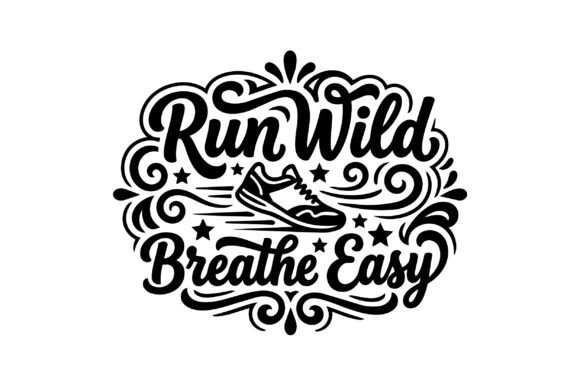
As someone who’s stitched hundreds of custom projects—from boutique sweatshirts to nursery pillows—I opened Run Wild Breathe Easy Script Lettering expecting charm, but what stood out immediately was its quiet confidence. It’s not loud or aggressive; it’s fluid, grounded, and gently aspirational. The script flows like breath—long, unbroken strokes in “run wild,” then a subtle lift into “breathe easy,” anchored by that clean running shoe icon and delicate swirls and stars. It’s flat-design smart: no gradients, no shadows, just bold negative space and intentional line weight. That simplicity is its biggest strength—and its first real test.
A Tote Bag That Feels Like a Promise
Last week, I prepped this design for a small-batch embroidered tote bag order—handmade goods for a local running club’s wellness retreat. Cotton canvas, medium-weight, light heather grey. I chose black thread for contrast and ran a quick test on scrap fabric with tear-away stabilizer. The script held beautifully: the curves stayed smooth, the “e” in “breathe” didn’t collapse, and the shoe icon stitched cleanly without floating stitches. Customers responded instantly—not just to the message, but to how legible it felt at 4.5 inches wide. That matters. A phrase like “breathe easy” loses meaning if it reads like scribble. Here, every letter lands with calm clarity.
Where It Shines (and Where It Asks for Care)
Run Wild Breathe Easy Script Lettering works best when you let its rhythm breathe. It’s ideal for:
- Custom apparel—especially relaxed-fit sweatshirts, crewnecks, and oversized tees where the script can drape naturally across the chest or back;
- Tote bag design and kitchen towel projects, where horizontal flow reads easily at arm’s length;
- Embroidered patch applications—its flat, graphic style translates cleanly to twill or felt backings;
- Nursery decor and baby embroidery, especially on organic cotton blankets or onesies (just size down thoughtfully—more on that below);
- Holiday embroidery and wedding gifts, like linen pillow covers or monogrammed aprons for fitness-loving couples.
But it’s not universally forgiving. Avoid using Run Wild Breathe Easy Script Lettering on:
- Small hoop sizes under 4×4 inches—tight curves and fine star details risk distortion or skipped stitches;
- Stretchy fabric like ribbed knits or lightweight jersey without proper cut-away stabilizer;
- Textured fabrics such as bouclé or heavy terry cloth—the swirls and thin lines can get lost in the pile;
- Curved surfaces like caps or beanies—unless resized and re-digitized for curve compensation (this file is flat, not contoured);
- Dark fabric without testing thread contrast first—white or light grey thread may lack pop unless you adjust density or add underlay.
What It Does for Your Craft Business
If you’re an Etsy seller, small shop product creator, or digital embroidery file reseller, Run Wild Breathe Easy Script Lettering adds quiet professionalism. It doesn’t scream “sale”—it invites pause. That makes it strong for branding: think minimalist studio logos, wellness brand merch, or handmade product tags. Buyers trust designs that look intentionally crafted—not rushed or overly busy. This one feels considered. Its balance of motion (“run wild”) and stillness (“breathe easy”) gives it emotional resonance, which lifts perceived value. A $38 embroidered sweatshirt with this design feels more thoughtful than one with generic cursive.
For personalized gift work, it’s versatile but needs context. Pair it with a single running shoe motif for a marathoner’s birthday, or soften it with tiny embroidered daisies for a new mom’s “breathe easy” baby blanket. It’s not prescriptive—it’s a mood, not a mandate.
Practical Embroidery Designer Notes
Before stitching your first finished product:
- Test on scrap fabric—same weight and weave as your final piece;
- Check thread color contrast in natural light; avoid relying solely on screen previews;
- Review stitch density—if you’re layering over seams or thick hems, reduce fill stitch count slightly to prevent puckering;
- Confirm hoop size compatibility—the full layout likely fits a 5×7, but verify before hooping expensive fabric;
- Inspect small details—especially the tips of the swirls and star points—some digitizers over-stitch these, causing thread breaks;
- Test in black-and-white mockups to assess legibility on both light and dark backgrounds;
- Use appropriate stabilizer: medium-weight cut-away for knits, tear-away for stable wovens, and optional topping for napped fabrics;
- Verify licensing before selling finished items or bundling the design into digital product kits—this is a Graphics asset, not automatically commercial-use licensed unless stated.
Final Thought: Less Is Anchored Here
There’s a reason so many crafters reach for script lettering—it’s personal, expressive, human. But not all scripts hold up under needle and thread. Run Wild Breathe Easy Script Lettering does. Its strength isn’t in complexity, but in restraint: generous spacing, consistent stroke weight, and icons that support—not compete with—the message. It’s the kind of Illustrations asset that looks equally at home on a yoga studio’s apron or a therapist’s holiday card. It doesn’t shout. It settles in. And in handmade work—where attention, care, and intention are the real materials—that’s everything.