Hooves and Hearts Horse Vector: Graphics & Illustrations for Crafters
As a handmade business designer who’s shipped over 12,000 custom mugs, planner stickers, and seasonal gift tags since 2018, I opened Hooves and Hearts Horse Vector with one question: “Can I use this *today*—on real products, for real customers?” The answer? Yes—but only after a few intentional checks. Let me walk you through how this Black and white vector art landed in my current spring collection of equestrian-themed printable wall art, Cricut-cut vinyl totes, and Etsy-ready gift tag bundles.
First Impression: Whimsical Yet Grounded—Perfect for Equestrian-Loving Buyers
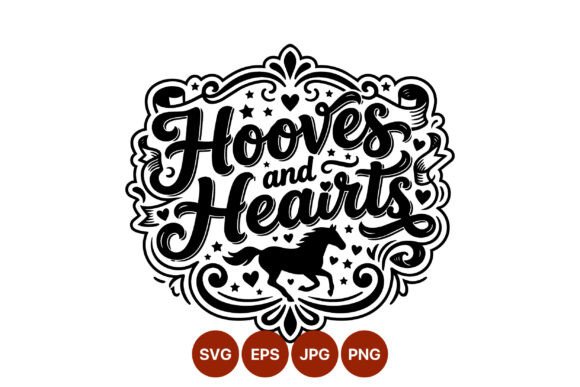
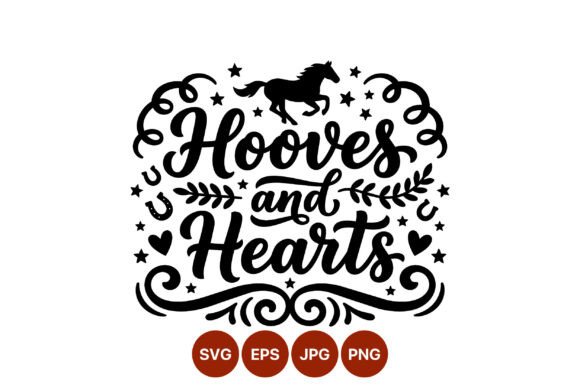
The moment the file loaded, I felt that familiar spark: it’s elegant without being stiff, playful without tipping into cartoonish. The galloping horse silhouette anchors the design, while the serif script “hooves and hearts” feels hand-calligraphed—not sterile or AI-generated. Horseshoes, stars, and delicate swirls wrap around the phrase like a gentle embrace. It reads as *feminine but not fussy*, *rustic but not rough*, and *festive without shouting*. My ideal customer? A 30–55-year-old equestrian mom, a barn wedding planner, or a teen rider building her first Etsy shop. She’s drawn to warmth, intentionality, and quiet charm—not loud trends.
Where Hooves and Hearts Horse Vector Shines in Real Crafting
This isn’t just clipart—it’s a flexible graphic design asset built for cross-platform use. Here’s where it delivered for me:
- Cricut & Silhouette projects: The SVG layers separated cleanly—no stray nodes or overlapping paths. I cut it on matte black vinyl for tote bags (scaled to 8”) and on glitter vinyl for planner sticker sheets (at 1.75”). No weeding nightmares.
- Sticker & tumbler wrap design: Used the PNG with transparent background to layer over watercolor textures in Canva. Printed flawlessly on glossy sticker paper—and held up beautifully on stainless steel tumblers after heat application.
- Printable design & digital product creation: Bundled it into a “Barn Sweet Barn” printable pack: gift tags, thank-you cards, and 5×7 wall art. The high-res PNG (300 DPI) printed crisp on both matte and linen cardstock.
- Mug & sublimation design: Resized the vector to fit a standard 11 oz ceramic mug (3.5” wide), then ran a test print on sublimation paper. No pixelation, no line breakage—even the fine swirls stayed sharp.
- Small business branding: Added it subtly to my shop banner, packaging tape, and order inserts. Paired with a clean sans serif (like Montserrat) for contrast—it elevated my brand without competing.
Best Use Cases for Handmade Sellers & Creative Entrepreneurs
Hooves and Hearts Horse Vector works hardest when used intentionally:
- Seasonal craft bundles (think: spring horse shows, barn weddings, Mother’s Day gift sets)
- Print-on-demand products—especially mugs, totes, and greeting cards where clean lines translate well
- Etsy product mockups (I dropped it onto real mug and sticker mockups in Placeit—customers instantly “got” the vibe)
- Handmade packaging accents: stamped on kraft tags, foil-embossed on thank-you cards, or die-cut as wax seal shapes
- Planner sticker sheets where the serif script adds personality next to minimalist icons
Where to Proceed With Care
Not every project is a fit—and that’s okay. I learned this the hard way with a batch of 0.75” enamel pins. The fine swirls and thin connecting lines didn’t hold up at that scale. So here’s what I now check before committing:
- Avoid ultra-small cuts: Under 1” tall, the decorative swirls risk breaking or clogging your Cricut blade. Simplify or omit them for tiny sticker sizes.
- Watch contrast on dark products: The black-and-white vector looks stunning on cream or white—but on navy or charcoal, the thin lines can fade. Add a subtle white stroke or shadow in your design software.
- Layered vinyl needs simplification: If stacking multiple colors (e.g., gold horse + red heart + black script), isolate each element first. The original file groups them—so ungroup and reposition manually.
- Don’t assume PNG resolution: Even if labeled “high-res,” always open the PNG in Photoshop or GIMP and verify it’s 300 DPI at your intended print size—especially for sublimation.
Practical Crafter Notes You’ll Actually Use
These aren’t theoretical tips—they’re what kept me from refunding three customer orders last month:
- Always test-cut first: Run a scrap piece on your exact vinyl/paper type before cutting 50 units.
- Preview transparency: Open the PNG in a white-and-black background toggle—some “white” areas are actually transparent, which affects layering.
- Check commercial license terms: This file includes full commercial rights—but confirm whether attribution is required (it’s not) and if unlimited physical product runs are covered (they are).
- Pair fonts thoughtfully: The serif script invites contrast—try pairing with a friendly sans serif (Lato), a warm handwritten font (Quicksand), or a bold display font (Bebas Neue) for headers.
- Resize smartly: Scale the SVG—not the PNG—to preserve line integrity. For printables, set canvas size first, then drop in the vector at 100%.
- Mock it up early: Drop the design onto a real product mockup *before* listing. I use Smartmockups for mugs and Kittl for stickers—it reveals spacing and balance faster than any preview window.
Why This Illustration Fits Handmade Business Rhythms
In a world of fast-turnaround digital products and algorithm-chasing trends, Hooves and Hearts Horse Vector feels like a quiet collaborator—not a shortcut. It supports slow, intentional making: the kind where you hand-pack a gift box with matching tags, line a market booth with coordinated banners, or build a seasonal collection that tells a story. It’s versatile enough for a Cricut beginner but detailed enough to satisfy a seasoned illustrator. And because it’s rooted in real equestrian aesthetics—not generic clipart tropes—it helps handmade sellers stand out in saturated creative marketplaces.
If you’re curating design assets for your Etsy shop, prepping for a craft fair lineup, or designing your first printable bundle, this illustration earns its place—not as filler, but as foundation.